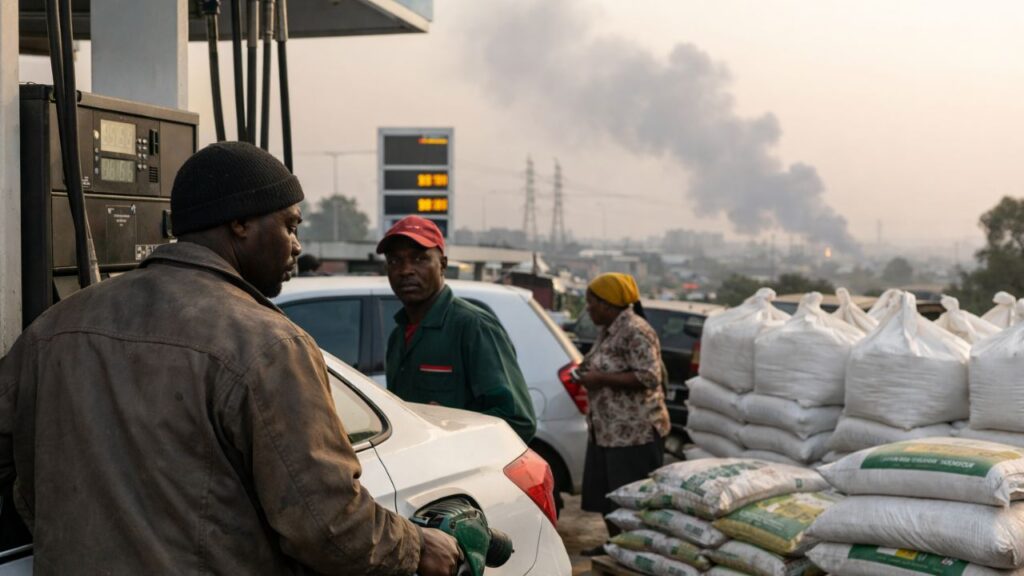
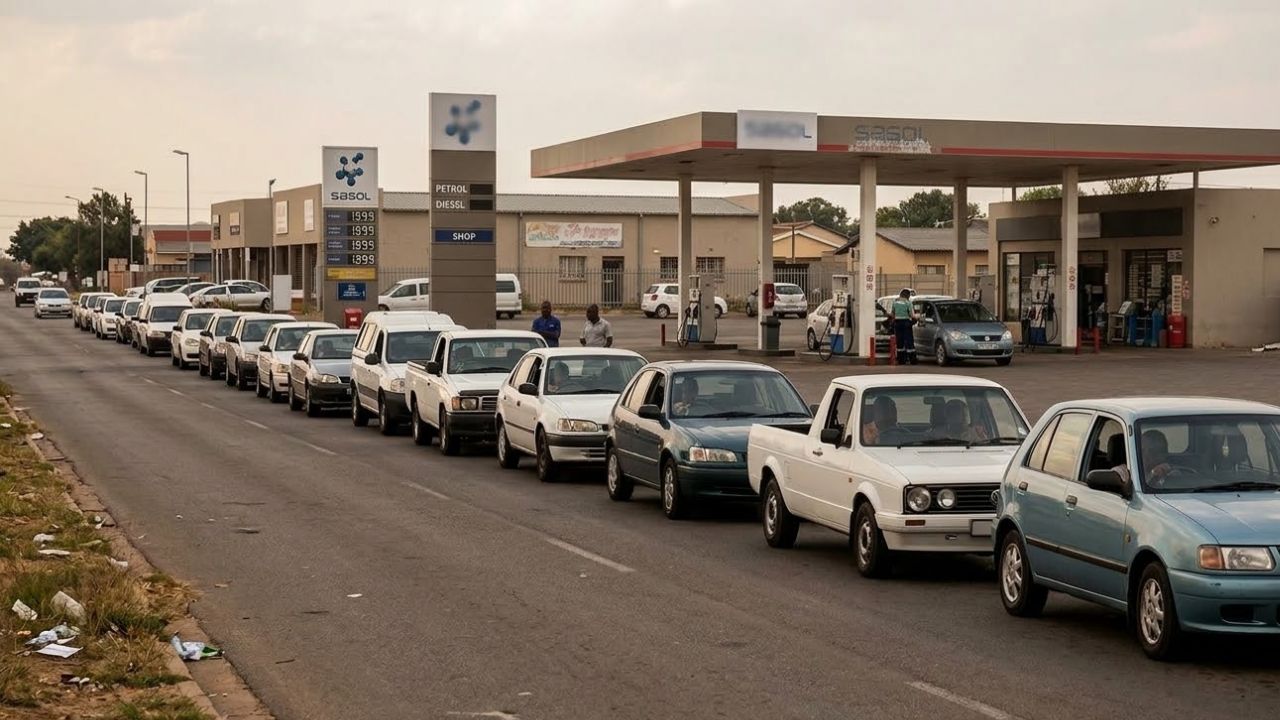
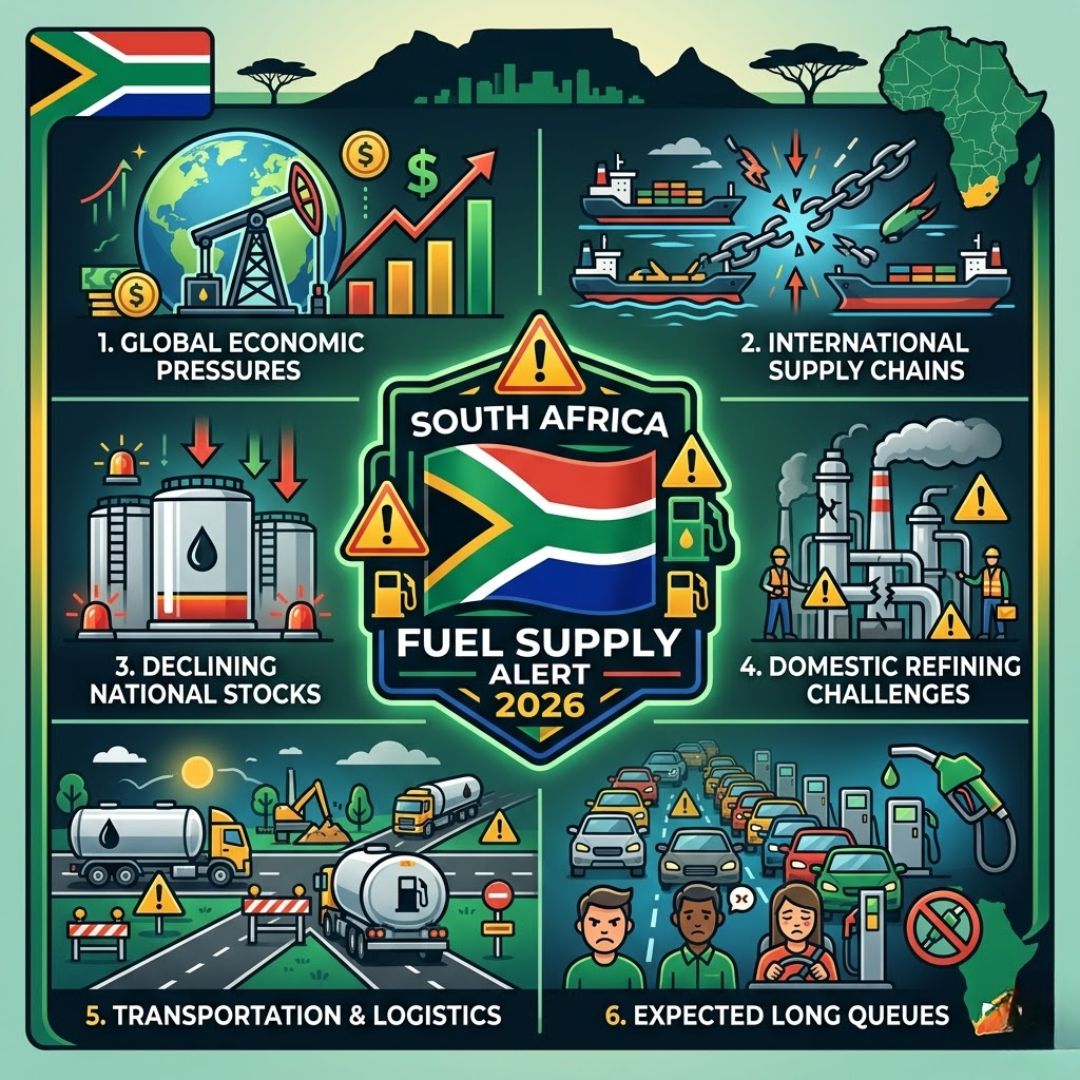
Experts say that South Africa’s currently stable fuel supply is becoming more vulnerable because of rising tensions in the Middle East. They say that the country’s reliance on imported crude and reduced local refining capacity makes it more likely that supply chains will break down, which could lead to fuel rationing and long lines.
The Department of Mineral and Petroleum Resources (DMPR) has told the public many times that there is “currently no immediate risk of fuel shortages in South Africa.”
The Fuels Industry Association of South Africa (FIASA) agreed with this, but said that businesses have already put in place “controlled allocation measures to ensure ratable and equitable supply to all customers.”
 Fuel and Fertiliser Price Warning in South Africa: Economists Cite Middle East Conflict Impact
They are taking steps to stop opportunistic buyers from speculating and stockpiling by banning unplanned or ad hoc demand.
The Sasol Secunda coal-to-liquids plant and the two working crude oil refineries, NATREF and Astron Energy, are the only ones that the country currently uses. This comes after two major local oil refineries permanently closed down in the past few years.
Professor Vally Padayachee, an expert on energy and power, says that this lower capacity is a big problem.
“South Africa only has two working crude oil refineries, plus the Sasol Secunda plant. This makes us vulnerable to supply chain disruptions, especially since we rely on imported crude oil.”
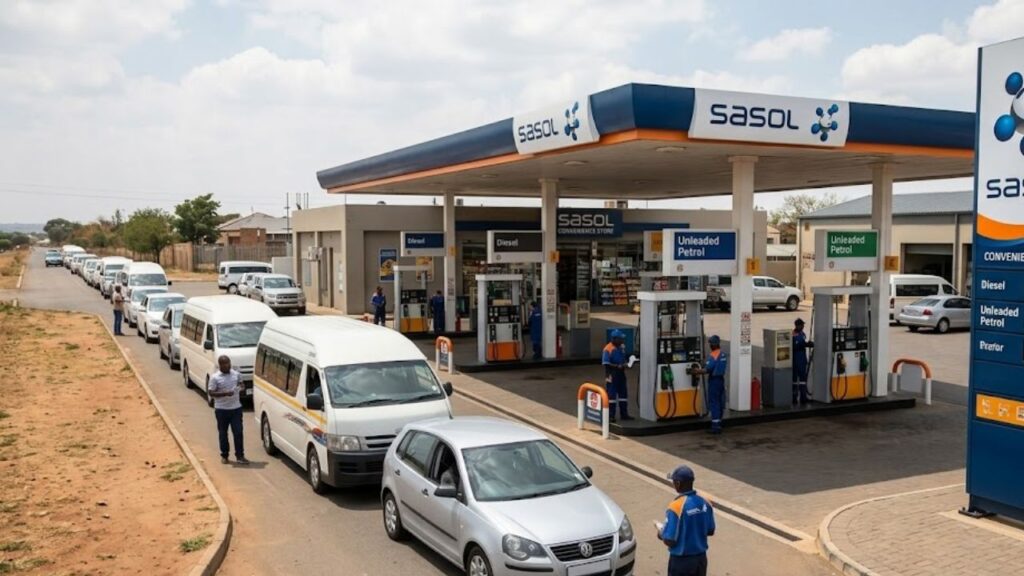
He said, “It would be wise for South Africans to stay alert because any sudden rise in geopolitical tensions could lead to fuel rationing and long lines at gas stations.”
James Lorimer, the DA’s spokesperson on Mineral and Petroleum Resources, said that a possible shortage is a concern, but not one that needs to be worried about right away.
Lorimer said that South Africa is “not too badly off” when it comes to crude oil because only 18% of it comes from Saudi Arabia. Most of it comes from West African countries like Nigeria, Angola, and Ghana.
He also said that almost 40% of South Africa’s fuel comes from coal (Sasol), 10% comes from the NATREF refinery, and the Astron refinery in the Western Cape is currently getting enough crude oil to keep running.
But Lorimer was more worried about bringing in already processed gasoline.
“Since our other refineries are down, a lot of our fuel comes in as already processed gasoline. “We rely on refineries in other countries for that,” he said, adding that he knew that a lot of this pre-processed fuel comes from India and the UAE.
The DMPR confirmed that the facilities that are currently in use depend on crude oil imports, mostly from West Africa but also from other countries on the African continent.
Also, oil companies that used to get refined petroleum products from areas affected by conflict are “actively exploring alternative supply sources to ensure uninterrupted fuel availability in the domestic market.”
FIASA and other industry stakeholders are stepping up their monitoring to deal with the changing situation.
FIASA said that the DMPR, Transnet, LPG wholesalers, and oil companies currently meet with them once a week, but that these meetings will become daily from March 20, 2026, to allow for real-time coordination and quick decision-making.
Gavin Kelly, the CEO of the Road Freight Association, says that the effects of higher fuel prices go far beyond what the consumer has to pay.

“For an economy like South Africa’s that imports oil, the result is often unavoidable: higher energy prices at home. When fuel prices go up, the cost of moving goods… finally to stores is affected by these higher input prices.
Kelly said that transport companies have to choose between raising rates, which the customer will have to pay, or absorbing the cost, which puts a lot of stress on “cash flow and reserves.”
Ernst van Biljon, head lecturer of Supply Chain Management at IMM Graduate School, talked about how hard things were for the economy as a whole.
Van Biljon said, “As a net importer of crude oil, higher global prices go straight to South Africa’s domestic fuel costs as long as road transport is the main way the country moves goods.”
He stressed the importance of planning ahead, saying that businesses need to plan “to avoid production shutdowns and supply chains not working at their best.”
Lorimer also warned that prices will go up no matter what happens with supplies.
He said, “The problem is that even if we do have enough, the price is going to go up.” He said that “maybe another R3 a litre” is more what we need to worry about if the war goes on and the Strait of Hormuz stays closed for a few months.
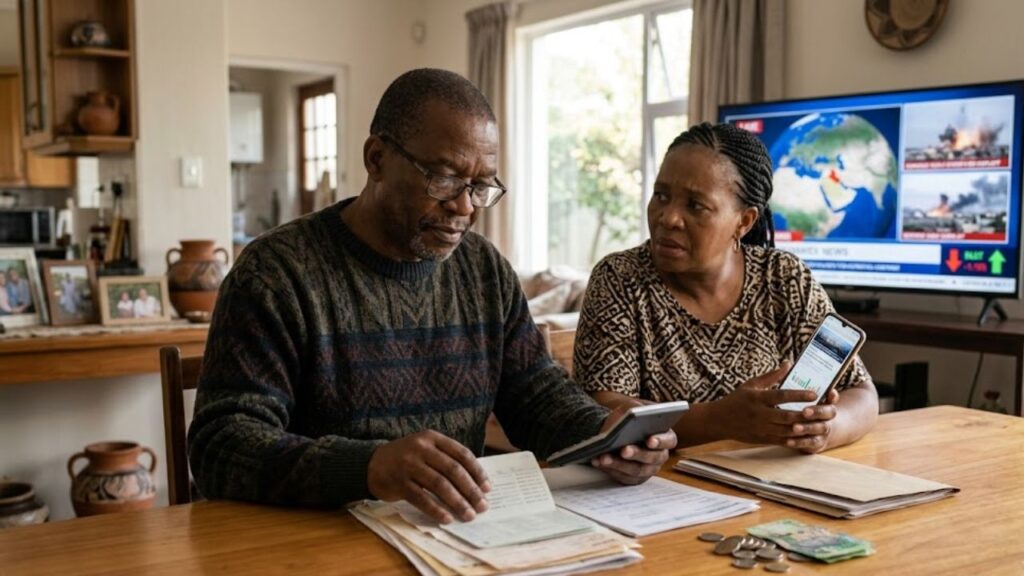
As the National Automobile Dealers’ Association (NADA) pointed out, the rising cost of logistics will put “additional strain on already constrained consumer budgets.” This is because the price increases will spread through the value chain and raise prices on all goods and services.
As the peak winter demand period approaches, worries are growing about the possible lack of Liquefied Petroleum Gas (LPG) supply.
FIASA says that the supply of LPG is stable and not currently affected, but Professor Padayachee sees the possibility of an LPG shortage as a “cause for concern.”
He urged, “It is very important for the government and industry to make sure there are enough reserves of LPG and that local production is reliable enough to meet seasonal needs, so that there are no shortages.”
Professor Padayachee said that the government is doing a good job of keeping an eye on things, but that a break is not enough.
“While they have calmed people’s fears about the current situation and planned fuel imports, a strong, long-term plan is needed.” He said, “This should include increasing local refining capacity, keeping strategic reserves, and putting money into renewable energy sources to cut down on our reliance on imports.”
Lorimer told people to “be aware of it” and that was the message he wanted to send. There’s no reason to get upset right now, though.
Padayachee said that South Africa’s plan to deal with its fuel shortage should include lessons learned from the Eskom load shedding crisis, with an emphasis on diversification and working together with more stakeholders.
He stressed that the country needs a broad approach that puts energy security, sustainability, and resilience at the top of the list of priorities in order to deal with problems at home and abroad and be ready for anything.