Next month, South African drivers will have a lot of problems. The Central Energy Fund (CEF) says that the price of petrol will go up by almost R4.00 per liter in April, before the fuel tax increases are added.
The CEF’s market snapshot for the end of the second week of March shows that recoveries are still getting worse.
Prices for diesel are even worse, with an under-recovery of between R6.63 and R6.75 per liter. Prices for petrol are showing an under-recovery of between R3.62 and R3.98 per liter.
 Older Persons Grant Increase 2026: Updated Payment Amount and Eligibility Checks for Pensioners
People who rely on illuminating paraffin will also be shocked, as the fuel is the least likely to recover, at R8.53 per liter.
These are the levels that are expected to be reached by the end of week 2:
- Petrol 93 up 362 cents per liter
- Gasoline 95 up 398 cents per liter
- Diesel 0.05% wholesale price went up by 663 cents per liter.
- Diesel 0.005% wholesale 675 cents more per liter
- Increased price of illuminating paraffin 853 cents per liter
These under-recoveries show a big drop since the beginning of the month, which is due to the ongoing conflict in the Middle East.
On March 18, the US and Israel started “Operation Epic Fury” against Iran, bombing its capital and killing its former Supreme Leader, Ali Khamenei.
Iran struck back by attacking US military bases in nearby countries, which led to the war getting worse.
The rising oil price, which went from less than $60 a barrel at the start of the year to over $110 a barrel in recent weeks, has caused the most problems in the markets.
Prices have calmed down, but they are still high over $100 a barrel.
The war also ended the rand’s winning streak because investors moved their money from risky markets to safe-haven assets.
The rand fell from high levels below R16/$, moving it back toward R17/$ and almost losing the gains it had made over the past few months.
The rand’s drop has been somewhat offset by a rise in the prices of gold and platinum, but this hasn’t been enough to change people’s minds about the situation.

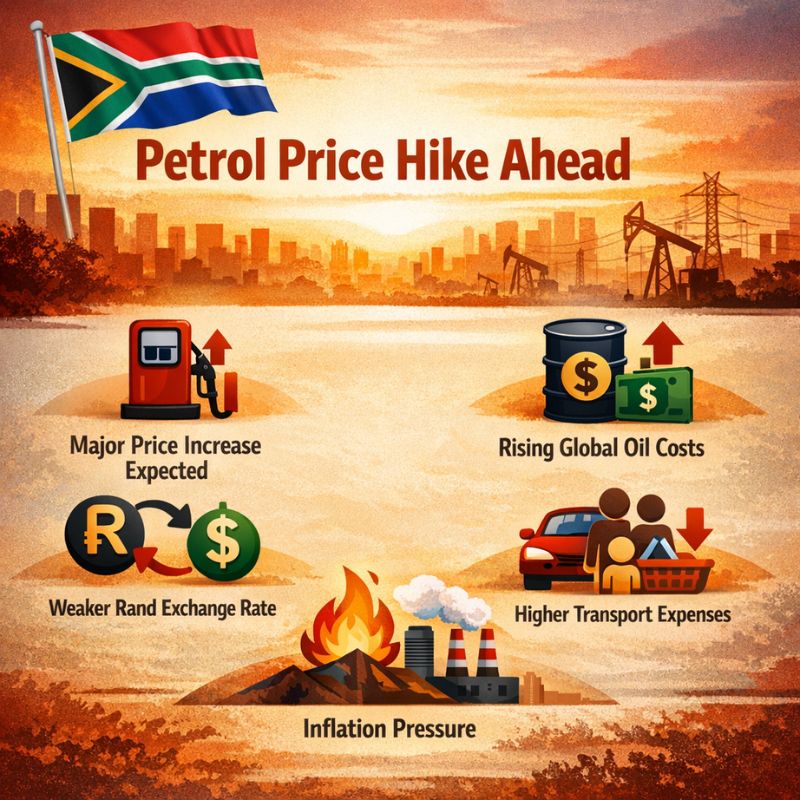
This means that the worst-case scenario of a big rise in oil prices and a much weaker rand has come true, and shocks to the prices of gasoline and diesel are almost certain to follow.
Taxes on fuel will make things worse.
April is also the start of South Africa’s new state financial year, which includes the implementation of tax measures. This is on top of the bad global market situation.
South Africans didn’t have to pay R20 billion in new taxes in 2026, and they will actually get some help with inflationary tax brackets. However, the country did have to pay more in fuel taxes.
Starting on April 1, the government will add 21 cents to the price of fuel, which will make gas prices go up even more.
Here are the tax changes that are coming:
- The general fuel levy is going up by 9 cents per liter for petrol and 8 cents per liter for diesel, bringing the total to R4.10/liter and R3.93 per liter, respectively.
- The carbon fuel tax is going up by 5 cents per liter for gasoline and 6 cents per liter for diesel.
- The Road Accident Fund tax is going up to R2.25 per liter, which is 7 cents more than it was before.
AfriForum, a civil rights group, has asked the government to cancel the planned tax increases so that drivers and businesses won’t have to deal with the rise in fuel prices in April.
The group wrote to Enoch Godongwana the Minister of Finance, asking him to stop the planned rise in the general fuel levy and instead give consumers a temporary tax break to help them deal with the expected rise.
In 2022, the government took a similar step by lowering the general fuel levy by R1.50 per liter for a short time.
This was done to help families deal with the global energy shock caused by the war between Russia and Ukraine.
As things got back to normal, the fuel tax was slowly raised back to normal (adding R1.50 per liter), and it stayed that way until 2025.