South Africa’s currency weakened against the US dollar on Wednesday after new inflation data from the United States matched market expectations. At the same time, global investors continued to watch developments in the Middle East closely, as fears over rising oil prices kept markets cautious.
The rand traded around 16.3750 against the dollar, roughly 0.5% weaker compared with Tuesday’s closing level. The currency has been under pressure in recent days and lost more than 3% of its value during the previous week.
Analysts say the decline is largely linked to global risk concerns and the continued rise in oil prices. Because South Africa relies heavily on imported energy, higher oil prices tend to place additional strain on the country’s currency.
 South Africa Traffic Enforcement Changes From 18 March 2026: Automatic Licence Suspensions Explained
The rand briefly stabilised after US President Donald Trump indicated that tensions in the Middle East might ease in the near future.
Despite this temporary relief, market experts warned that the local currency remains extremely sensitive to geopolitical developments, particularly given the uncertainty around how long the conflict could last and how deeply it might impact global energy markets.
Iran’s military leadership also warned on Wednesday that global oil prices could potentially surge to as high as $200 per barrel if tensions escalate further.
Meanwhile, the US dollar strengthened slightly, gaining about 0.2% against a basket of major currencies. The move followed data showing the US Consumer Price Index increased by 0.3% in February, meeting economists’ forecasts and exceeding January’s 0.2% rise.
Investors are now waiting for the upcoming release of the Personal Consumption Expenditures (PCE) index on Friday, which is the Federal Reserve’s preferred gauge of inflation.
Like many emerging market currencies, the rand often reacts strongly to global developments, including geopolitical events and major economic data releases.
Within South Africa, investors are also preparing for a series of key economic reports expected this week. These include mining production figures, manufacturing statistics for January, and current account data for the fourth quarter, all of which may provide a clearer picture of the country’s economic performance.
On the Johannesburg Stock Exchange, the Top-40 index dropped by about 2% during trading.
By Thursday, 12 March, the rand was trading at approximately R16.58 against the dollar, R22.16 against the British pound, and R19.13 against the euro. Gold prices were recorded at $5,152.06 per ounce, while oil prices climbed to around $99.65 per barrel.
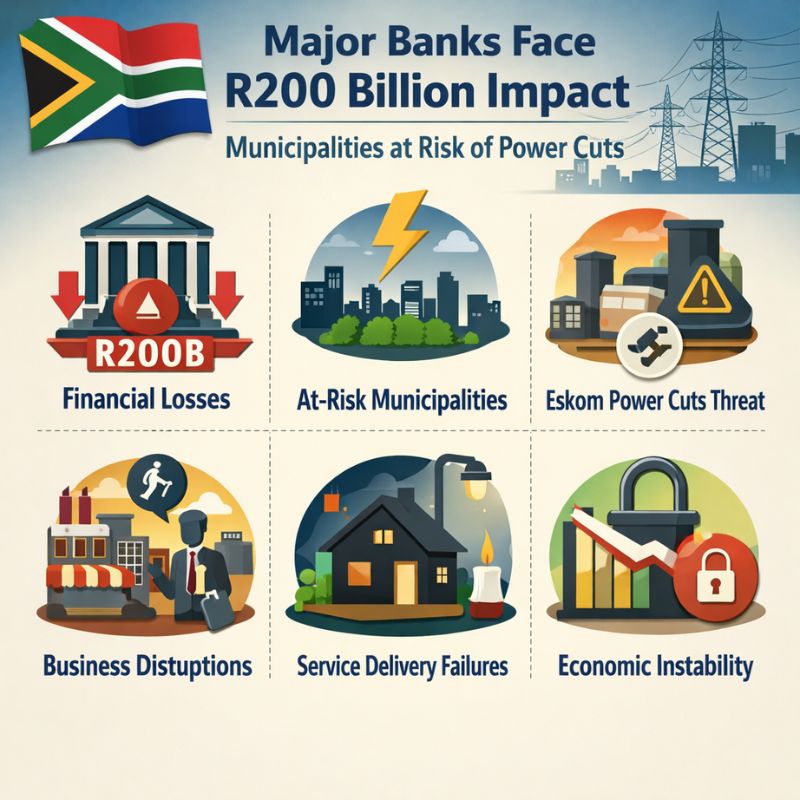
R200 Billion Loss for South Africa’s Major Banks
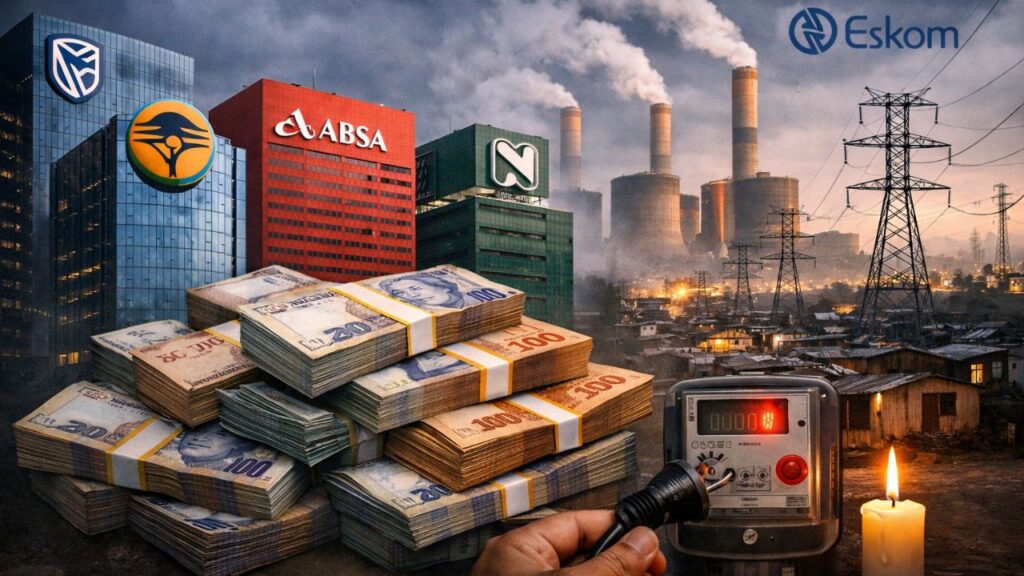
South Africa’s five largest banks by market capitalisation have collectively lost more than R200 billion in value since the Middle East conflict began.
The Public Investment Corporation (PIC) has been the most affected investor due to its large exposure to the banking sector.
Among the biggest losses, FirstRand declined by more than R52 billion, Standard Bank dropped by around R50 billion, Capitec lost approximately R53 billion, Absa fell by R30 billion, and Nedbank declined by about R22 billion.
Market analysts say the sharp drop highlights how international conflicts can quickly impact South African financial markets, drawing comparisons with the market turbulence experienced during the early stages of the Covid-19 pandemic.
 NSFAS Pays Out Over R6.3 Billion as More Than 1.24 Million Students Approved for 2026 Funding
Eskom Warns 14 Municipalities of Possible Power Disconnections
Eskom has announced credit control measures that may lead to electricity supply cuts for 14 municipalities that have failed to settle outstanding debt.
One of the municipalities listed is Ekurhuleni, which supplies electricity to key infrastructure including OR Tambo International Airport.
According to Eskom, municipal debt owed to the power utility has now exceeded R110 billion, prompting the company to take stricter steps to recover outstanding payments.
The utility has released the full list of municipalities that could face disconnection if their accounts remain unpaid.
Diesel Supply Restrictions Begin in Agricultural Areas
Although major fuel stations across South Africa have not yet limited petrol or diesel sales, several agricultural suppliers have begun restricting diesel purchases for farmers.
In many smaller towns and rural regions, agricultural businesses sell diesel at prices lower than large commercial fuel stations.
These businesses, although no longer farmer-owned cooperatives, remain a preferred option for farmers as they help reduce farming costs, particularly for fuel-intensive operations.
Subscriber Decline Hits DSTV Owner MultiChoice
MultiChoice, the owner of DStv, has reported a continued drop in subscriber numbers.
The company’s subscriber base declined from 14.9 million to 14.4 million in 2025. At the same time, operating profit fell by 14% to €159 million, equivalent to roughly R3 billion.
These figures were released by Canal+, which recently acquired the South African pay-TV operator and published its first annual financial results following the acquisition.
The decline in subscribers reflects a broader trend that has been affecting the company since 2023.
Chicken Prices Expected to Remain Stable
Despite rising beef prices caused by the foot-and-mouth disease outbreak, consumers in South Africa may receive some relief when it comes to poultry prices.
Demand for chicken products remains strong, but producers say prices are likely to stay stable in the coming months.
Rainbow Chicken, the country’s second-largest poultry producer, confirmed that chicken prices are expected to remain steady for at least the next six months, continuing the price stability seen over the past half year.